Griddle & stack · Makes about 16
Crempog
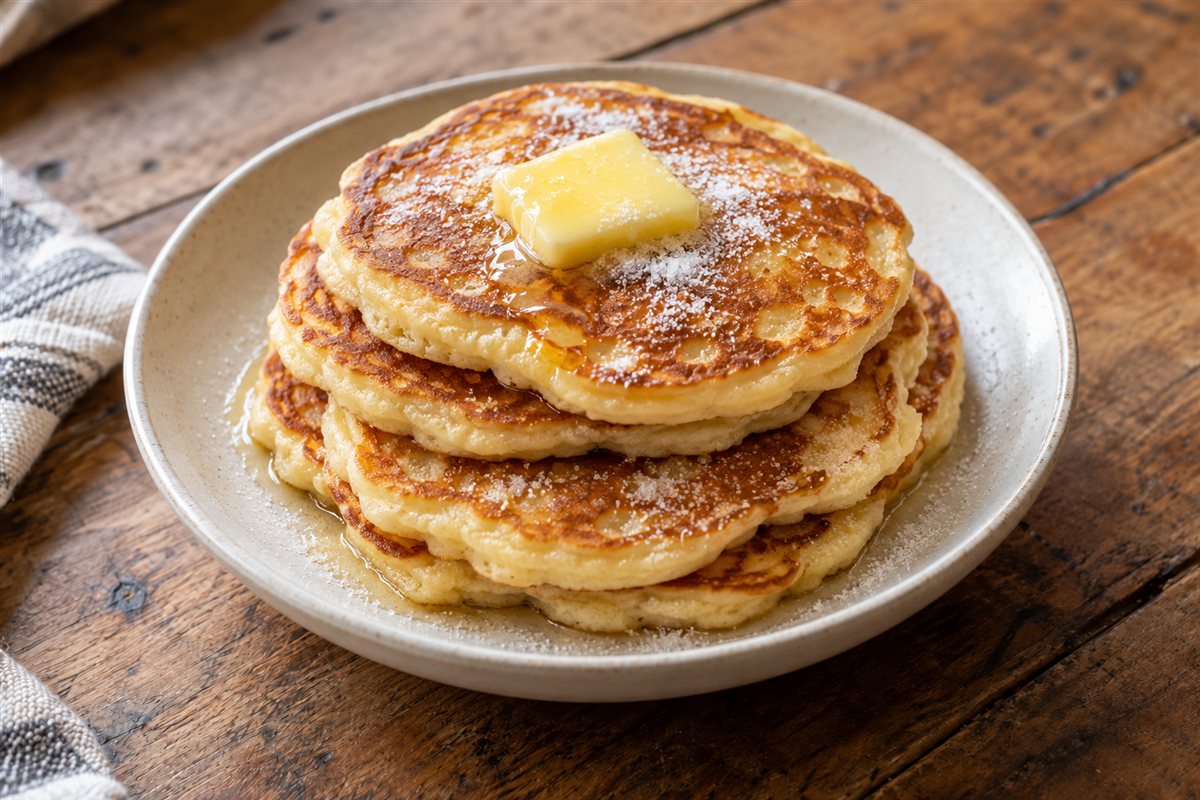
Crempog are small, thick Welsh pancakes made with buttermilk, cooked on a griddle and piled into a buttered stack. Light and tender, with a gentle tang, they sit somewhere between a crêpe and a fluffy drop scone.
Pancakes for a special day
In Wales, Shrove Tuesday has long been a day for crempog. Families made them by the dozen on the bakestone, and in some villages children went from door to door asking for pancakes. Today they are just as welcome on a weekend morning. The buttermilk is the key: its acidity reacts with the bicarbonate of soda to lift the batter, and it gives the pancakes their soft crumb and slight sharpness.
The traditional way to serve them is in a tall stack, with butter spread between the layers, cut into wedges like a cake.
What you’ll need
Tick things off as you go.
Take your time
- Mix the dry ingredients. Sift the flour, bicarbonate of soda and salt into a large bowl and stir in the sugar.
- Warm the butter and buttermilk. Melt the 50 g butter in a small pan, take it off the heat and stir in the buttermilk. It should feel just warm, not hot.
- Make the batter. Make a well in the flour, add the eggs and the buttermilk mixture and whisk until smooth. The batter should be thick but pourable, like double cream; add a little milk if needed. Cover and leave to rest for 30 minutes.
- Heat the griddle. Warm a griddle or heavy frying pan over a medium heat and wipe with a little butter.
- Cook the pancakes. Pour about 2 tablespoons of batter per pancake into the pan, spacing them well apart, so they spread to about 10 cm. Cook for 1½ to 2 minutes, until bubbles appear on the surface and the edges look set. Flip and cook for another minute until golden.
- Stack and butter. Keep the cooked pancakes warm on a plate under a clean tea towel, spreading a little butter between each layer. Serve the stack warm, with sugar or honey and lemon.
Why rest the batter
Resting lets the flour absorb the liquid and the bubbles from the buttermilk and bicarbonate start to form. The result is lighter, more even pancakes. Do not leave the batter much longer than an hour, though, or it will lose some of its lift.
No buttermilk?
Stir 1 tablespoon of lemon juice or white vinegar into 300 ml of whole milk and leave it for 10 minutes until it thickens slightly. It will not be quite as thick as real buttermilk, so you may not need any extra milk to loosen the batter.
Getting an even colour
The first pancake is always the test. If it browns before the bubbles appear on top, lower the heat. Wipe the pan with a little butter every couple of batches, using kitchen paper, so the pancakes colour evenly rather than in spots.
Serving ideas
Crempog are lovely simply buttered and sprinkled with sugar. Try them with stewed apples or blackberries in autumn, with a spoonful of thick yoghurt, or with crisp bacon for a savoury brunch. They also go well beside laverbread cakes on a breakfast plate. For another bake from the same griddle, make a batch of Welsh cakes.
Keeping and reheating
Cooked crempog keep, wrapped, for a day. Reheat them for a few seconds on each side in a warm, dry pan. They also freeze well, layered with baking paper; reheat from frozen in a pan or a low oven.