Bakes & griddle cakes · Tea-time
Welsh cakes
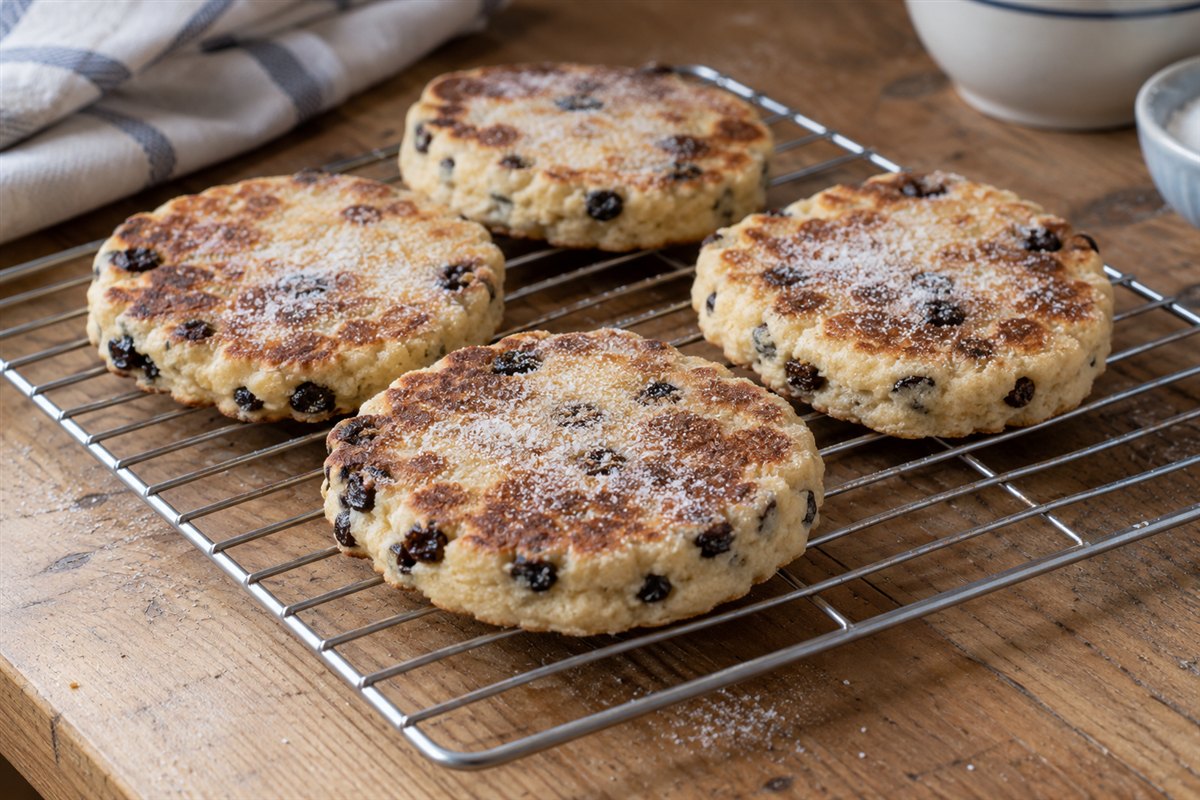
Somewhere between a scone, a biscuit and a pancake, Welsh cakes are cooked on a flat griddle rather than in the oven. They are quick to make, best eaten warm and dusted with sugar, and they rarely last long on the plate.
Cakes from the bakestone
In Wales these little cakes are called picau ar y maen, "cakes on the stone", after the heavy iron bakestone or maen that sat on the range in many kitchens. A cast-iron griddle or a thick-based frying pan does the job just as well. Because they cook on direct heat, they have a golden crust on both sides and a soft, crumbly middle.
The dough is close to a rich shortcrust: fat rubbed into flour, then sugar, dried fruit and egg to bind. A mix of butter and lard is traditional and gives a short, tender texture; all butter works perfectly well.
What you’ll need
Tick things off as you go.
Take your time
- Rub in the fat. Sift the flour, mixed spice and salt into a bowl. Add the butter and lard and rub in with your fingertips until the mixture looks like fine breadcrumbs.
- Make the dough. Stir in the sugar and currants. Add the beaten egg and mix with a knife, then your hand, to a firm dough. Add a little milk only if it is too dry to come together; it should feel like pastry, not sticky.
- Roll and cut. On a lightly floured surface, roll the dough out to about 5 mm thick. Cut into rounds with a 6 cm plain or fluted cutter, gathering and re-rolling the trimmings once.
- Heat the griddle. Warm a griddle or heavy frying pan over a medium-low heat and wipe it with a little butter or oil. Test with one cake first: it should take about 3 minutes to turn golden underneath.
- Cook in batches. Cook the cakes for 2½ to 3 minutes on each side, until golden brown and cooked through; the sides should look dry rather than doughy. Adjust the heat if they colour too quickly.
- Sugar while warm. Transfer to a wire rack and dust generously with caster sugar while still warm.
Getting the heat right
The only tricky part of Welsh cakes is the griddle temperature. Too hot and the outside scorches before the middle has cooked; too cool and they dry out and turn pale and hard. Medium-low is usually right, but every hob and pan is different, so the first cake is your test. If it browns in under two minutes, turn the heat down; if it is still pale after four, turn it up a little.
There is no need to add much fat to the pan. A light wipe at the start, and again every couple of batches, is enough.
Thickness and size
At 5 mm thick the cakes cook through evenly and stay soft. Thicker cakes need a lower heat and longer cooking, and risk staying raw in the middle. Small cutters give dainty cakes for a tea table; a 7 cm cutter makes a more generous size for lunch boxes.
Variations
Swap the currants for chopped dried cherries, or add the finely grated zest of an orange or a lemon. Some bakers split a warm cake and spread it with jam, which turns it into something close to a sandwich. A pinch of nutmeg in place of the mixed spice is another old favourite.
Storing Welsh cakes
They are at their best within a few hours of cooking, but will keep in an airtight tin for 2 to 3 days. Warm them for a few seconds on the griddle to refresh them. They also freeze well: cool completely, freeze in a bag, and reheat from frozen in a dry pan over a low heat. If you enjoy baking with dried fruit, the tea-soaked bara brith and the soft, plate-baked teisen lap are close cousins.