The Sunday table · Serves 6
Roast Welsh lamb
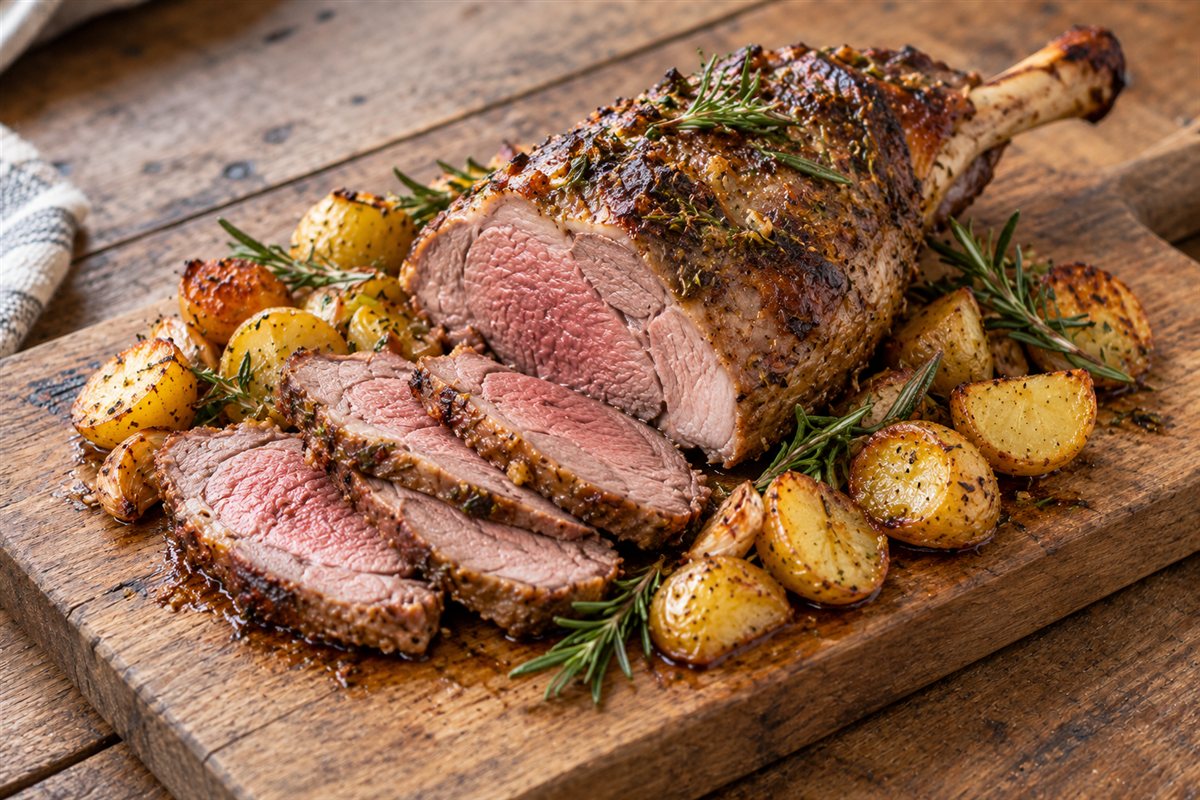
A roast leg of lamb, studded with garlic and rosemary and carved at the table, is the centrepiece of many Welsh Sunday lunches. Spring lamb from the hills has a sweet, delicate flavour that needs very little help, just good timing and a proper rest before carving.
A joint worth taking care over
Welsh lamb is raised on hill and lowland pasture, and spring and early summer bring the youngest, most tender meat. A bone-in leg is the classic joint: the bone conducts heat and adds flavour, and the different muscles give both pinker and more cooked slices, which suits a table with mixed tastes.
The method below starts in a hot oven to brown the outside, then turns the heat down so the inside cooks gently and evenly.
What you’ll need
Tick things off as you go.
Take your time
- Heat the oven. Heat the oven to 220°C fan (240°C conventional, gas 9). Weigh the joint to work out the cooking time: 20 minutes at high heat, then 15 minutes per 500 g at the lower heat for pink, or 20 minutes per 500 g for well done.
- Stud the lamb. With a small sharp knife, make about 20 small, deep cuts all over the meat. Push a sliver of garlic and a tuft of rosemary into each. Rub with the oil and season well.
- Roast. Lay the onions in a roasting tin and sit the lamb on top. Roast for 20 minutes, then reduce the oven to 180°C fan (200°C conventional, gas 6) and cook for the remaining time: about 1 hour for a 2 kg leg cooked pink, about 1 hour 20 minutes for well done.
- Check and rest. A thermometer pushed into the thickest part, away from the bone, should read about 60°C for pink or 70°C and above for well done. Lift the lamb onto a board, cover loosely with foil and rest for 20 to 30 minutes.
- Make the gravy. Spoon off most of the fat from the tin. Set it over a medium heat, stir in the flour and cook for 1 minute. Add the wine and let it bubble, scraping up the browned bits, then add the stock and simmer for 5 minutes. Strain, adding any juices from the resting lamb.
- Make the mint sauce and carve. Finely chop the mint with the sugar, stir in the boiling water, then the vinegar. Carve the lamb across the grain and serve with the gravy and mint sauce.
Why resting matters
As the joint rests, the juices settle back into the meat instead of running out onto the board, and the temperature inside continues to rise by a few degrees. Thirty minutes will not let it go cold under foil, and it gives you time to finish the gravy and the vegetables.
Pink or well done
Whole joints of lamb can be served pink in the middle, as long as the outside has been well browned. If you prefer it cooked through, give it the longer timing and check that the juices run clear. Smaller or boneless joints cook faster, so start checking earlier.
What to serve alongside
Roast potatoes, cooked in the hot oven while the lamb rests, are the obvious partner. Add buttered leeks, roast carrots or a dish of swede mashed with black pepper. In Wales, laverbread warmed with butter is sometimes served with lamb. Leftover lamb is lovely cold in sandwiches with chutney, or chopped and added to a pot of cawl the next day.
Storing leftovers
Cool the leftover meat within two hours, wrap well and keep in the fridge for up to 3 days. Reheat slices in gravy until piping hot, or eat cold. For a cheese-based dish that could follow the roast later in the week, try the Caerphilly and leek tart.